
Capability Statements Compared for Government Bids
Compare reusable and opportunity-specific capability statements with a bid response so each supports government-bid decisions without replacing tender requirements.
Dayal Tony
Contributor

Capability Statements Compared for Government Bids
Businesses often use “capability statement” for several different documents. A one-page supplier profile can help introduce a company. A tailored capability document can organize evidence for one opportunity. An ACAN statement of capabilities is a formal response to specific published requirements. A full bid is governed by the solicitation. Mixing them up can create a polished document that fails its actual job.
This comparison is about document fit, not a formula for winning contracts. Canada Business Solutions is an independent business consultancy, not the Government of Canada, CanadaBuys, Public Services and Procurement Canada or an authorized decision-maker. No document or advisor can guarantee registration, compliance, evaluation or award.
Compare purpose, evidence and compliance side by side
| Document | Primary purpose | Best fit | Main risk |
|---|---|---|---|
| Reusable capability statement | Introduce the supplier consistently | Networking, outreach and buyer conversations | Generic claims without evidence or buyer relevance |
| Tailored capability statement | Connect capabilities to one buyer, category or emerging need | Focused outreach or early opportunity research | Overstating fit before requirements are known |
| ACAN statement of capabilities | Demonstrate that the supplier meets every published ACAN requirement | A specific Advance Contract Award Notice | Submitting marketing language instead of criterion-by-criterion proof |
| Full bid response | Respond to a competitive solicitation exactly as instructed | A tender the business has qualified and decided to pursue | Missing a mandatory item, form, method or deadline |
Government of Canada seminar notes state that suppliers must understand the bidding and submission requirements in solicitation documents, including security, capacity, experience and submission method. A capability statement can support that work, but it cannot override the solicitation.
Option one is a reusable supplier capability statement
This is the closest format to a corporate profile. It should help a buyer understand what the business supplies, where it can deliver, which customer problems it addresses and what evidence supports those claims. Keep it concise and easy to update.
Useful sections
- legal and operating name, with contact details;
- plain-language core goods or services;
- service geography and delivery model;
- relevant product and service categories or codes, verified for the platform being used;
- specific differentiators that can be proven;
- selected past-performance evidence the business is authorized to disclose;
- current certifications, clearances or registrations only when verified and relevant;
- languages, capacity and accessibility information where accurate.
This option fits a business that needs one controlled source for outreach. It does not fit a supplier that intends to attach the same page to every solicitation without reading the tender. Keep an evidence register behind the document so every number, credential, project and customer reference has an owner, source, date and permission status.
Option two is tailored to one buyer or opportunity
A tailored capability statement begins with the reusable source but changes the emphasis. It uses the buyer’s terminology carefully, selects only relevant evidence and explains how the supplier’s actual capacity connects to the requirement. It should not copy restricted material, claim an inside relationship or suggest that outreach changes the evaluation rules.
| Reusable version | Tailored version |
|---|---|
| Lists all main services | Leads with the services relevant to the buyer’s need |
| Uses broad differentiators | Links each differentiator to current, provable evidence |
| Shows a small cross-section of experience | Selects analogous work and explains the relevance without exaggeration |
| Uses general contact information | Names the internal response owner and readiness path |
| Updated on a schedule | Revalidated for the target opportunity and date |
This option fits early market engagement, a supplier meeting or an internal bid/no-bid decision. It is still not the bid. CanadaBuys is the official source for federal tender notices; use the current notice and documents rather than relying on a buyer summary or old template.
Option three is an ACAN statement of capabilities
The phrase has a precise procurement meaning in this context. CanadaBuys’ current ACAN guidance explains that an Advance Contract Award Notice signals an intention to award to a pre-identified business while allowing others to demonstrate that they can meet the published requirements. A supplier’s statement of capabilities is assessed against those requirements.
A generic corporate capability statement is not automatically an ACAN response. The response should map every criterion to clear evidence, follow the notice’s instructions and arrive through the specified channel by the stated deadline. The notice controls language, format, contact and proof.
| ACAN response field | What to build | Control |
|---|---|---|
| Requirement | Quote or accurately label each published criterion | Current ACAN notice |
| Response | State how the supplier meets it | Truthful supplier facts |
| Evidence | Attach or cite permitted documentation | Notice instructions and confidentiality |
| Availability | Confirm only what the supplier can deliver | Current capacity and authorization |
| Submission | Use the specified contact, language and deadline | Current notice |
Option four is the full bid response
A bid responds to a solicitation and is evaluated under that solicitation’s rules. Canada’s current supplier bidding resources point businesses to guidance on reading solicitation documents, fulfilling requirements, evaluation, submission and follow-up.
A practical compliance matrix should capture every mandatory and rated requirement, required form, certification, pricing instruction, security item, attachment, page rule, file format, signature, submission method and deadline. Assign an owner and reviewer to each row. Do not let the capability-statement narrative substitute for a direct response.
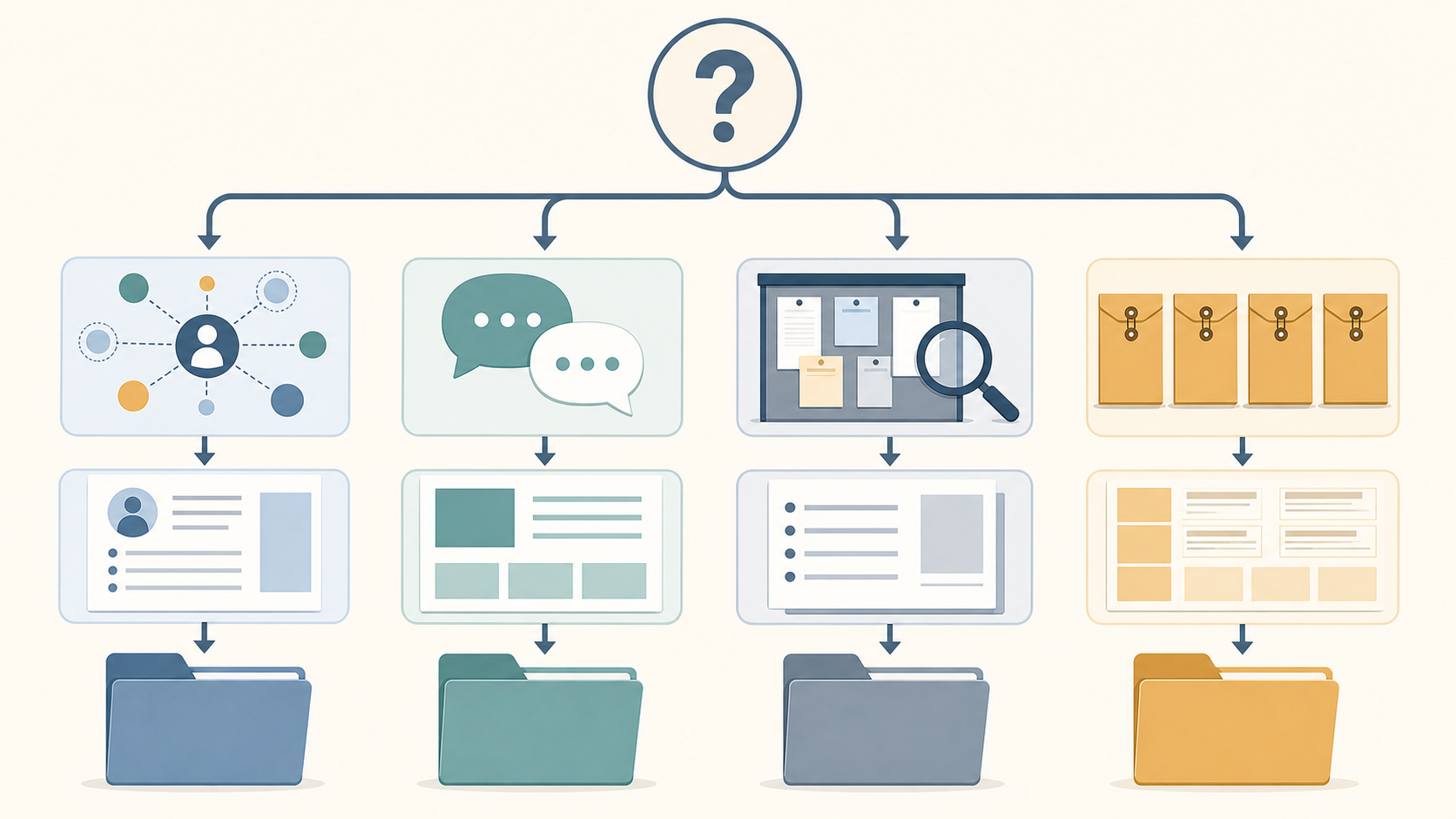
| Question | If yes | If no |
|---|---|---|
| Is there a live solicitation? | Build the compliance matrix and bid response | Continue opportunity and buyer research |
| Is there a specific ACAN? | Follow its statement-of-capabilities criteria | Do not use ACAN terminology |
| Is the document for targeted outreach? | Use a tailored capability statement | Use the controlled reusable profile |
| Can every claim be evidenced now? | Include relevant proof | Remove, qualify or verify the claim |
Build one evidence library behind every version
- Legal identity: confirm names, business number and addresses from current records.
- Offerings: define deliverables rather than using vague capability words.
- Capacity: document people, tools, locations, partners and limits.
- Past performance: record scope, dates, role, value where disclosure is permitted, and reference authorization.
- Credentials: retain issuing body, number, scope, status and expiry.
- Security and privacy: state only verified controls and clearances.
- Social and policy claims: retain evidence for ownership, environmental, accessibility or other representations.
- Version control: record document owner, approved date and next review.
Use neutral language where evidence is still pending. “Can obtain” is not “holds,” “worked alongside” is not “prime contractor,” and an expired certificate is not current. Get permission before naming a customer or disclosing contract details.
Common document mistakes and red flags
- One document for every purpose: outreach, ACAN and bids have different rules.
- Unsupported superlatives: “leading,” “best” and “proven” need evidence and often add little.
- Past performance without role clarity: say whether the business was prime, subcontractor or partner.
- Credentials without status: verify scope and expiry.
- Ignoring mandatory instructions: strong marketing cannot cure a non-compliant bid.
- Confusing registration with eligibility: a platform profile does not qualify a supplier for every opportunity.
- Claiming government affiliation: an independent consultant remains independent.
- Promising an award: buyers evaluate submissions under their procurement process.
Frequently asked questions
Is a capability statement required for every government bid?
No universal rule makes a marketing capability statement mandatory for every bid. The specific solicitation or notice says what must be submitted.
Is an ACAN statement of capabilities just a company profile?
No. It is a response to a specific ACAN and must demonstrate how the supplier meets the published requirements within the stated process.
Can I reuse the same capability statement?
Keep a controlled reusable source, but tailor relevant content and revalidate every claim. Never let reuse replace current solicitation review.
Does a strong capability statement improve award odds?
It may improve clarity and readiness, but no document guarantees eligibility, compliance, score or award. The governing evaluation decides.
Choose the document before writing it
Write the audience, decision and governing source at the top of the project. Then choose the reusable, tailored, ACAN or bid format and pull only verified evidence into it.
Sources reviewed
- Canada Business Solutions official website and service pages — first-party independent consulting context only; no government affiliation or result claim inferred.
- Government of Canada seminar notes on how government buys — registration, opportunity, solicitation and submission context.
- CanadaBuys ACAN guidance — current meaning and assessment role of an ACAN statement of capabilities.
- Government of Canada bidding resources — current solicitation-reading, submission and evaluation guidance.